
Location
West Point, NE
Services
Water Resources
Share Project
West Point Levee Improvements
Tested by one of the Elkhorn River’s greatest floods, West Point’s aging levee has been transformed into a resilient, multifunctional system built to protect the community for generations.
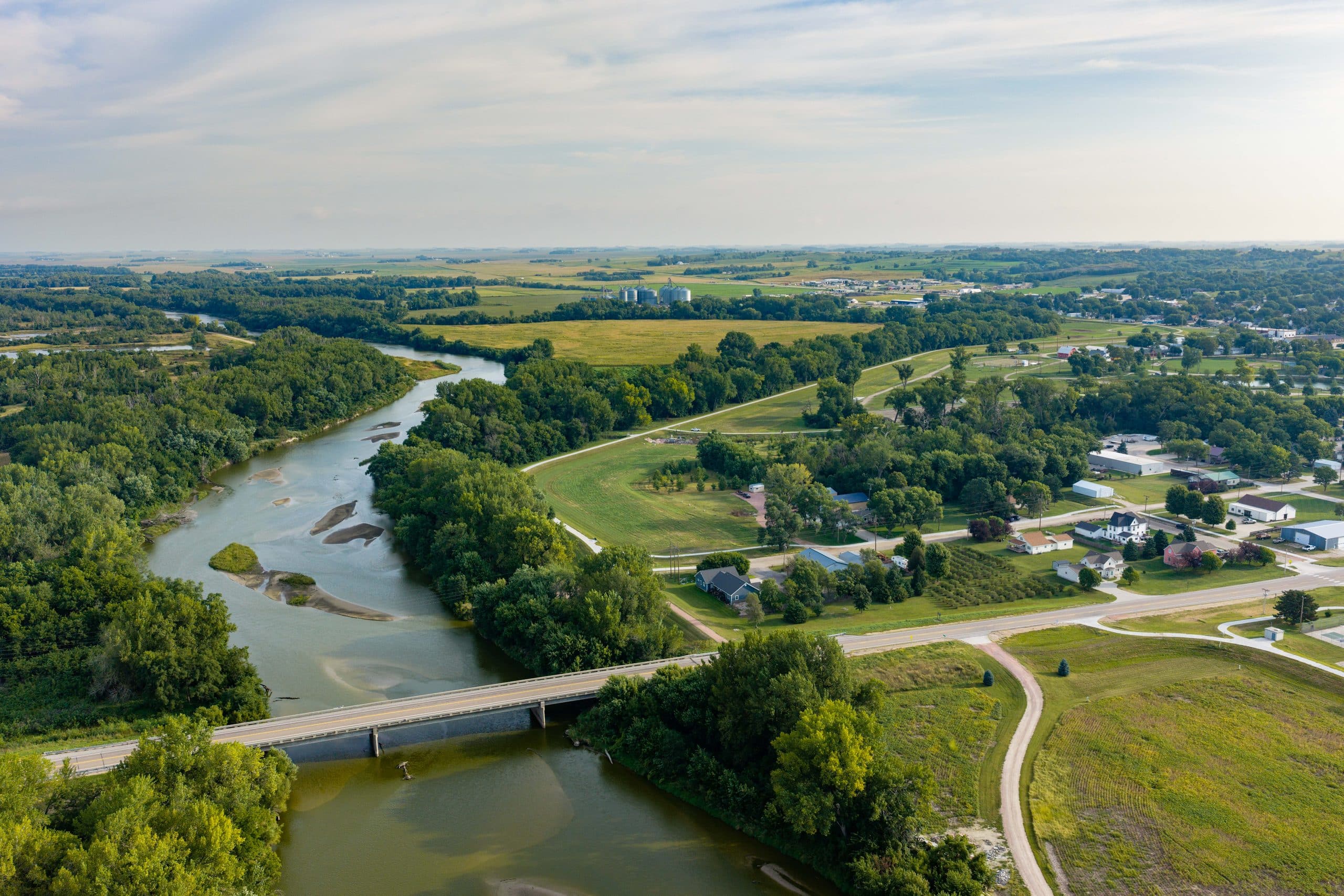
For nearly 60 years, West Point’s two-mile levee along the Elkhorn River has played a critical role in protecting the community from flooding. As the system aged and federal flood protection standards evolved, the City of West Point partnered with JEO to evaluate its condition and develop a long-term solution to strengthen flood resilience.
Beginning in 2012, we worked alongside the City to assess the levee’s deficiencies and guide improvements through planning, funding assistance, engineering design, permitting, and construction. The importance of this work became especially clear during the historic March 2019 flood, when rising waters threatened to overtop the levee. Our earlier evaluations helped identify vulnerable areas and inform emergency flood-fighting efforts that prevented significant community flooding. We then incorporated observations and data from the event into the final design.
Our team developed a comprehensive approach to modernizing the existing levee while addressing challenges related to levee height, underseepage, drainage, and limited space within the developed community. Improvements included raising portions of the levee to provide at least three feet of freeboard above the 100-year flood elevation, constructing targeted seepage berms and pervious toe trenches, enhancing drainage, and adding flood-monitoring capabilities.
Beyond flood protection, we helped transform the levee into a multifunctional community asset. A new hard-surface recreational trail provides opportunities for walking, running, and bicycling while also serving as an accessible route for routine inspections and emergency flood response.
Completed in spring 2026, the improvements reduce flood risk for approximately 3,640 residents, 510 structures, and $120 million in property value. The project also helps safeguard critical drinking-water and wastewater infrastructure, supports FEMA accreditation, and extends the useful life of an essential community asset. Through more than a decade of collaboration, we helped West Point strengthen its flood resilience while creating new opportunities for residents to connect with the infrastructure protecting their community.


