
Location
Arlington, NE
Services
Transportation
Awards
Nebraska Concrete Paving Association Excellence in Concrete Pavement
Urban Streets category
–
Share Project
Roadway improvements that make the grade
It was a bumpy trip to school in Arlington, Nebraska. Four street segments surrounding the Village’s K–12 school complex had deteriorated with severe potholes, and temporary repairs were no longer enough to keep them in good condition. A full-depth reconstruction was needed to not only restore the pavement, but to improve drivability, reduce long-term maintenance needs, and enhance the safety of the corridors.
Working in partnership with the Village and the school district, our team helped transform these aging streets into a safer, more reliable roadway network that better serves the school—and the entire community.
ROUNDING OUT THE EDGES
Enhancing safety for all roadway users was paramount on this project, with one location standing out as a major improvement.
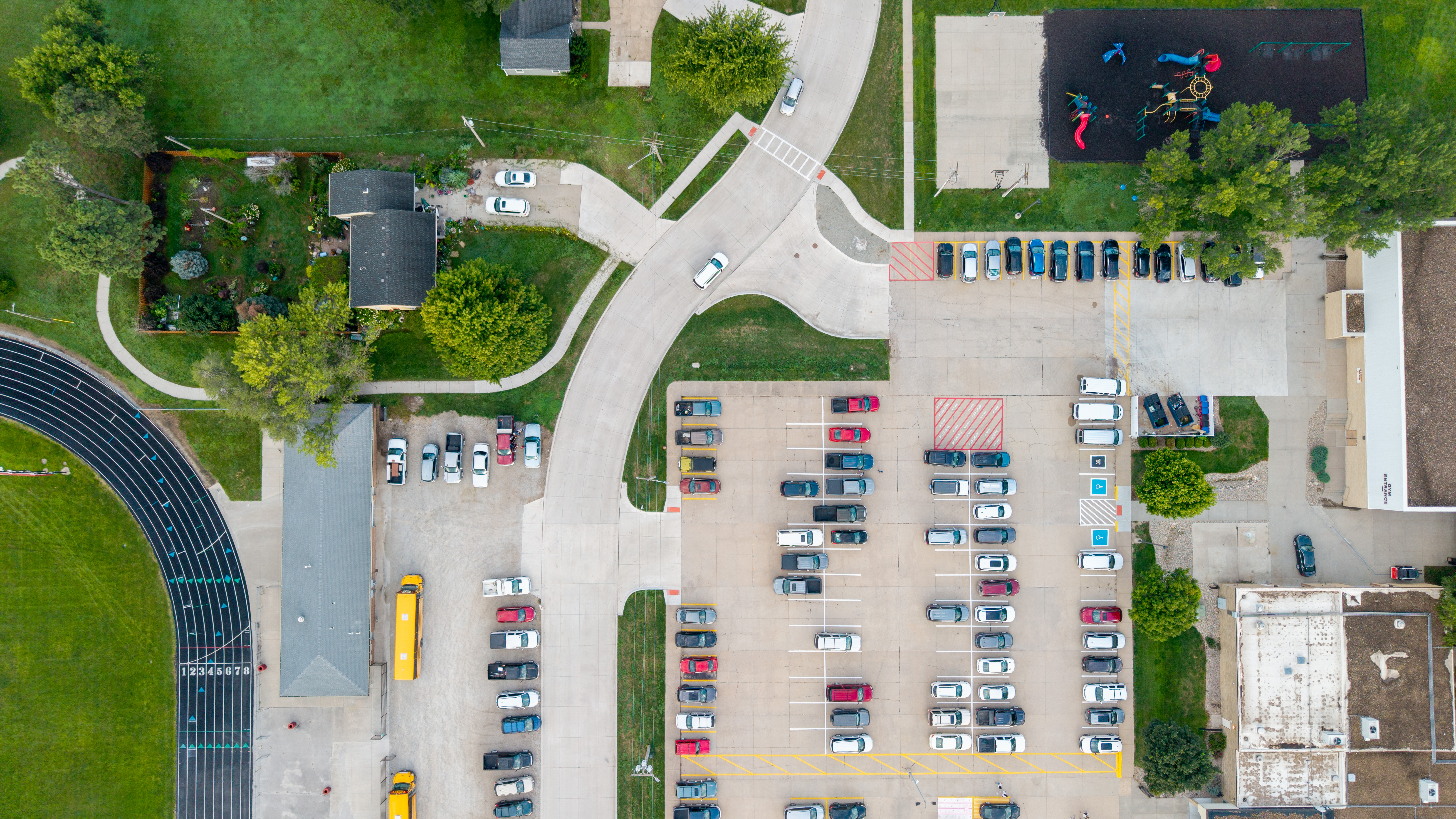
On West Dodge Street, between 9th and 11th Streets and just south of the school, the roadway previously included two closely spaced 90-degree turns near the school’s parking lot. These sharp turns created limited sight distance and posed challenges for pedestrians, school buses, and other drivers trying to maneuver around them.
Collaborating with school and Village officials, our team evaluated multiple concepts as alternatives for this stretch of roadway. Ultimately, a smoother S-curve alignment was selected to replace the existing sharp turns. The redesigned roadway now improves drivability, enhances sight lines, meets current design standards, and creates a safer experience for all users.
DETAILS MATTER
Beyond the new S-curve alignment, the project team incorporated additional safety enhancements throughout the project’s footprint:
- Improved pedestrian visibility: An existing crosswalk was designed to improve sight lines and increase visibility for both pedestrians and drivers, creating a safer crossing.
- Safer parking lot access: The school’s main parking lot driveway was realigned to better match the new roadway geometry created by the S-curves, improving sight lines for vehicles entering and exiting the lot.
- Clearer parking lot definition: A secondary parking lot near the football field previously blended into the adjacent street, creating confusion for drivers. A curb now clearly separates the roadway from the parking lot, improving traffic organization and safety.
- Enhanced residential driveway access: Two residences along the S-curve configuration previously shared a single driveway that entered Dodge Street at one of the corridor’s sharp 90-degree turns. Vehicles occasionally entered the driveway by accident after missing the first sharp turn. The project replaced the shared access with individual driveways for each residence, realigning them to intersect the roadway at a more perpendicular angle, improving visibility, and making it safer for residents to enter and exit.
- ADA accessibility improvements: Existing bicycle and pedestrian trails throughout the project area were upgraded in several locations to comply with current Americans with Disabilities Act accessibility standards.
ONE HALF AT A TIME
The project’s footprint touched 43 residences along four streets and surrounded three sides of the school. These locations needed continuous access throughout construction, so it was especially important that construction phasing met that goal.
Most of the construction occurred during the summer when students were out of school, but school staff needed access throughout the summer and needed access to at least one of their driveways.
This goal was accomplished by constructing each street one half at a time. This approach allowed one side of the street to remain open as a temporary one-way street while work progressed on the other half. Once the pavement was complete on one side, the work would switch to the other side.
Today, the reconstructed streets provide a smoother, safer ride for the nearly 1,500 vehicles that travel these corridors each day.


